How blog generation scales for marketing teams
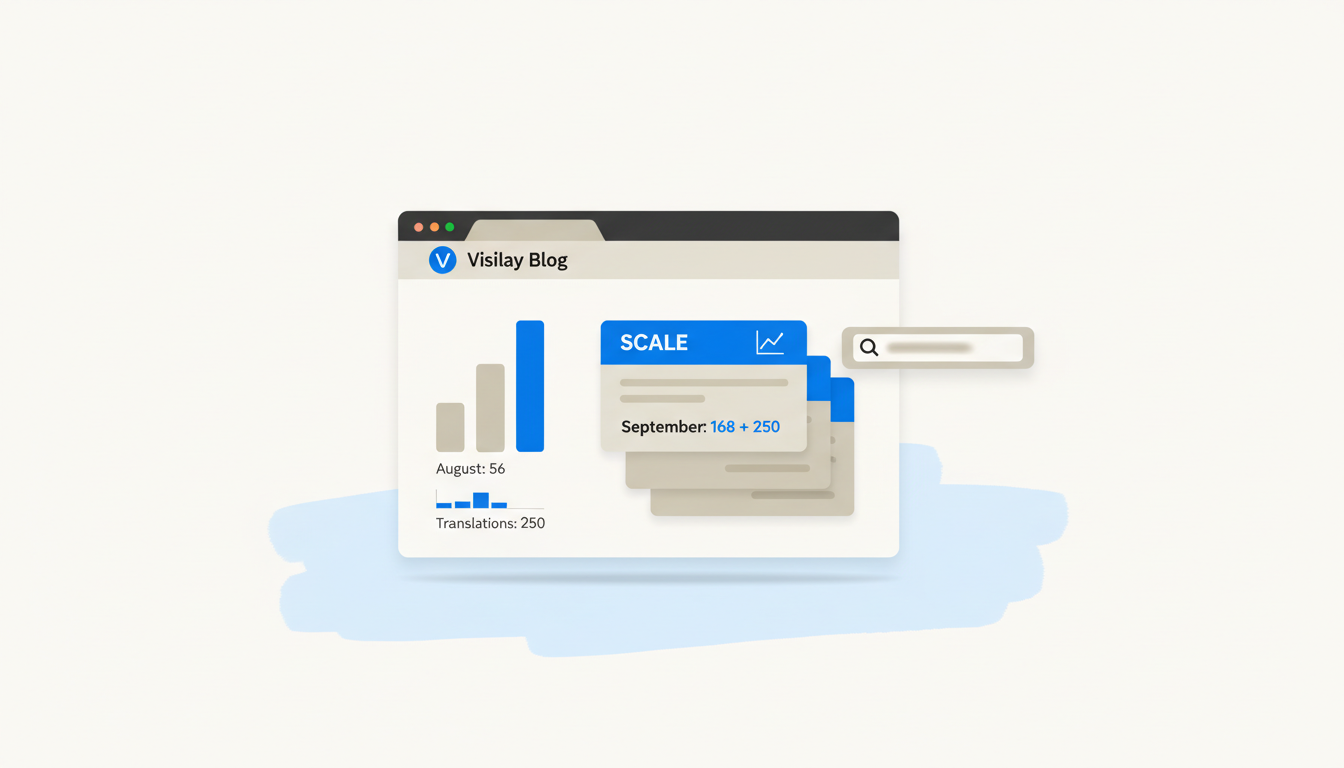
In September 2026 some teams proved scale is real: Visilay reported 56 articles in August and 168 in September, plus 250 English translations — a blunt signal that modern blog generation workflows can crank output when governance and tooling are right.
how Blogdat stitches the automated pipeline together
| One‑line setup |
|---|
| Blogdat links topic research, an evidence-first brief, AI drafting, hero image generation, scheduled publishing and automatic Google submission into a single dashboard for multi-site teams. |
That single sentence needs unpacking because your team will live in the details: topic discovery pulls portfolio-level gaps; an automated brief populates audience, evaluation criteria and product evidence; the draft is created with localization layers; an on‑brand hero image is rendered (with stock fallback); posts are scheduled and automatically submitted to Google to speed indexing and AI discovery. You keep the editorial queue as the source of truth and watch site readiness scores before anything goes live.
what happens in a Dashboard run (and where people step in)
Pick a topic, check coverage, build the brief, generate the draft and image, queue to sites, then submit to Google — with clear approval gates at two points.
From the Blogdat dashboard a single agent run looks like this:
- Topic pick: automated topic engine recommends ideas across your portfolio and flags duplicates.
- Coverage check: site coverage rules prevent reposts and mark languages for localization.
- Blueprint build: the brief auto-fills audience, intent, evaluation criteria and the review date (the evidence-first approach SALP SEO recommends).
- Draft + image: AI creates the post and an on‑brand hero image; SEO readiness and formatting templates are applied.
- Queue & approval: content is queued with an approval ticket; a human reviewer gets a short checklist before publish.
- Publish & submit: Blogdat posts to connected sites on schedule and auto-submits to Google to speed indexing.
Human handoffs are explicit. You decide which roles can hit the final approve button and which just annotate. Signals in the dashboard show SEO readiness score, time‑to‑review SLA, and whether product evidence was attached. In practice a 10‑minute human review is the sweet spot many teams adopt after LOW/CODE and Ahrefs guidance: fast enough to keep throughput, long enough to catch factual drift.
failure modes you will see and the Blogdat controls that stop them
| Common problem (short) |
|---|
| Invented outlines, the keyword-stuffing reflex, formatting drift and factual errors are recurring public failures — these are preventable with design. |
- Invented outlines — AI can hallucinate structure that looks plausible but doesn’t match search intent. Blogdat prevents this by enforcing brief constraints: required headings, linked evidence fields, and a short "must cover" list that the draft must cite.
- Keyword-stuffing reflex — some workflows push density over usefulness. The platform’s SEO readiness score detects over-optimization patterns and suggests intent-matching synonyms rather than repeats.
- Formatting drift — when multiple agents write for many sites, HTML and structure diverge. Blogdat applies site-specific formatting templates and a post-preview that shows final CMS markup before scheduling.
- Factual errors — automated drafting without evidence is fragile. The evidence-first brief requires product or data sources and attaches them to a review checklist; the reviewer must mark evidence verified before final publish.
This setup is not magic. It shifts failure modes from "unpredictable bad posts" to "systematic review work." That is a trade-off teams should expect.
time, cost and operational trade-offs
Brief writing that used to take 30–60 minutes can fall to about 2–3 minutes with AI assistance; expect a human review benchmark around 8–12 minutes per publish if you want safe throughput.
On the operations side, you must instrument review time and throughput so automation reduces work rather than moves it. Track three KPIs in Blogdat: brief generation time, reviewer time per publish, and review pass rate. If reviewer time rises while brief time falls, you’re just relocating effort.
how to measure those numbers
Use the dashboard to log timestamps for brief creation, reviewer assignment, first pass, and final approval. Set alerts when average review time exceeds your SLA.
This breaks when teams don't limit scope: end-to-end automation for high-stakes product claims or legal content will create rework. Reserve full automation for lower-risk classes and keep a human-first pipeline for risky content.
what to automate and what to keep manual
Not every post should be equal. Decide by repeatability and risk.
- Automate repeatable templates: local how-to guides, release notes, standardized product summaries, and translated evergreen posts.
- Hybrid workflow for variable content: case studies, original research, or anything that cites unique data — agent drafts, human edit, then publish.
- Keep manual: thought leadership, legal/claims-heavy posts, and interviews.
Operational rules to enforce this from a central dashboard: editorial queue locks for scheduled campaigns, separate pipelines/tags for agent vs human content, and SLAs for review (example: 2‑3 minute brief generation; 10 minute reviewer target; weekly review QA sample of 5% of agent posts).
signals, pacing and a short checklist to decide if you pilot now
Use 2026 evidence to set realistic expectations: Visilay’s run rates in August–September show you can reach hundreds of posts, but they also published translations and flagged where people had to step in. See the Visilay workflow for concrete cadence examples and numbers in their blog.
| Pacing guide |
|---|
| Start with 1–3 agent posts per site per week, validate indexing lift from auto-submission, then scale to daily if review SLAs and quality metrics hold. |
- Pilot checklist: approval-gated pipeline in place; blueprint templates ready; metrics dashboard logging brief and review time; portfolio sites flagged for agent content.
- Expected indexing benefit: automatic Google submission shortens the discovery window and helps AI models surface new content faster — Blogdat’s auto-submit removes a manual step many teams miss.
FAQ — quick answers you’ll need in the Monday stand-up
Is automatic publish safe? Not without gates. Never let an AI publish without a human verification step for factual or legal risk; Ahrefs and other practitioners explicitly recommend this guardrail (Ahrefs).
How do I measure ROI and reviewer time? Track time saved on briefs, reviewer minutes per publish, ranking delta and organic traffic per post. Low/CODE and SALP SEO both show brief-generation can be cut from 30–60 minutes to a couple of minutes when you have a mature brief system (LOW/CODE, SALP SEO).
How to separate agent vs human content? Tag posts at creation, show separate portfolio views, and publish under different author labels. Keep experimental agent runs in a sandboxed site or a clearly marked channel until the team trusts the pipeline.
One messy scene to expect: a Monday stand-up where a PM opens the editorial queue and finds half a dozen auto-drafts for sites with thin content — you’ll need the editorial lock to pause and reassign. That moment is when policies matter more than tools.
Limitations: scaled blog generation still breaks when your content depends on exclusive data or interviews, or when you try to substitute domain expertise with surface-level drafts. Automation accelerates volume; governance preserves quality.
Read also How to Generate SEO-Ready Blogs with AI and Auto-Index and How to auto submit blog to google and get it indexed faster.
