How to Generate SEO-Ready Blogs with AI and Auto-Index
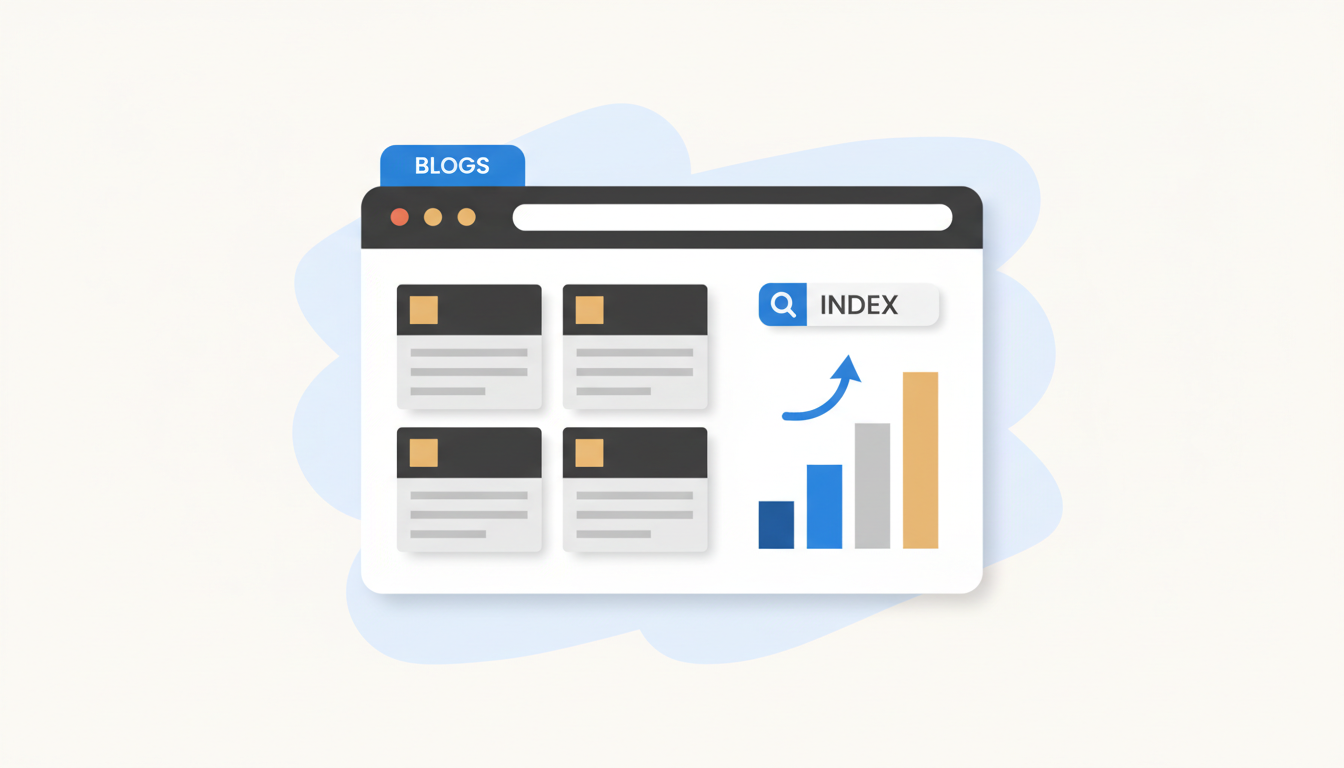
This article covers blog generation. In 2026, producing SEO-ready blog posts no longer requires weeks of drafting and manual submission. With the right workflow, teams can validate topics, draft with AI, and auto-index each post to Google from a single dashboard, keeping site portfolios fresh and discoverable. The shift toward unified content operations platforms means that keyword research, competitor gap analysis, multilingual localization, and technical indexing signals are no longer siloed across disconnected tools. Instead, they converge in a single workspace where a content strategist can move a validated idea to a live, indexed URL in hours rather than weeks. This acceleration is critical because Google’s freshness algorithms and AI-driven search features (such as SGE and AI Overviews) now reward sites that publish authoritative updates on a consistent cadence. Here is how the process works, from topic validation to live publication and ongoing governance.
Start with topic validation that actually sticks
Before a single line of AI text is generated, the topic must be proven to match search intent and have enough momentum to earn traffic. The 2026 workflow pulls ideas from Reddit and Facebook user‑generated threads, sales‑team call notes, Semrush competitor “Top Pages” analysis, and BuzzSumo’s evergreen score. One Backlinko experiment in late 2026 turned a LinkedIn test post into a full blog within 36 hours and gathered over 2,000 reactions and 200 reposts, proving that social‑pressure testing works. Authors then match the topic to one of four templates—classic list post, branded case study, tools of the trade, or ultimate guide—ensuring the format aligns with what users are searching for.
Expanding the validation layer, leading teams now layer on "Search Intent Clustering" using the platform’s native NLP module. This step groups semantically similar queries from Google Search Console, People Also Ask boxes, and autocomplete suggestions into distinct intent buckets (informational, commercial investigation, transactional, navigational). If a topic idea falls into a bucket where the SERP is dominated by video carousels or product listing ads, the brief is flagged for format pivot—perhaps a video-embed heavy listicle or a comparison table—before any drafting budget is spent. Additionally, a "Competitive Content Gap" report is auto-generated: the platform crawls the top 10 ranking domains for the primary keyword cluster and surfaces subtopics they cover that your site currently lacks. This ensures the brief commands topical authority, not just keyword matching.
Headline engineering that earns clicks
Once the template is chosen, the headline is built to match intent and capture the primary keyword early. Keeping titles between 50 and 60 characters protects them from truncation in the SERP, and including a number can lift click‑through rates by up to 36%, according to recent SERP studies. The keyword “blog generation” should appear near the start of the title to signal relevance to both readers and search engines immediately.
Beyond length and keyword placement, 2026 best practices demand "SERP Feature Optimization." The platform simulates how the title will render in standard blue links, AI Overviews, "Things to know" accordions, and Discover cards. Titles phrased as direct questions ("How to...") often win featured snippet real estate, while "Best [X] for [Y]" structures trigger product review schema eligibility. A/B testing metadata is now automated: the dashboard serves variant titles to 10% of organic traffic via edge workers for 72 hours, then locks in the winner based on CTR and dwell time differentials. This removes guesswork from headline finalization.
Build the content map and AI brief inside the platform
With the topic and headline set, the next step is to generate a content map and AI brief using the platform’s native keyword research and SEO readiness checks. The system surfaces target keywords, suggests multilingual briefs for each language version, and assigns a site SEO readiness score based on on‑page factors. CSA Research’s survey of 8,709 consumers across 29 countries found that 76% prefer product information in their own language, so briefs must include locale‑specific context from the start. This step also sets the publishing cadence and ensures every draft has a clear intent path before AI drafting begins.
The content map now extends beyond a simple H2/H3 outline. It includes a "Semantic Entity Map" listing required entities (people, organizations, products, concepts) that must appear for the content to satisfy Google’s Knowledge Graph alignment checks. The brief also specifies "Internal Link Quotas": a minimum number of contextual links to pillar pages, product pages, and recent cluster articles, drawn from the site’s live content inventory API. This prevents orphan pages and distributes link equity at birth. For multilingual rollouts, the brief auto-populates "Cultural Adaptation Notes" (e.g., currency, date formats, legal disclaimers, local case study swaps) rather than relying on straight translation, directly addressing the CSA Research finding that localization depth drives trust.
| Brief Component | Purpose | 2026 Automation Level |
|---|---|---|
| Primary & Secondary Keywords | Target query clusters | Auto-clustered from GSC + Semrush |
| Search Intent Cluster | Format & angle decision | NLP-classified from SERP features |
| Semantic Entity Map | Topical authority signal | Knowledge Graph API cross-ref |
| Internal Link Quotas | Site architecture health | CMS inventory API sync |
| Multilingual Locale Notes | Cultural relevance | Locale DB + native reviewer queue |
| SEO Readiness Score | Technical gatekeeper | Real-time Lighthouse + on-page audit |
| E-E-A-T Evidence Checklist | Quality threshold | Author schema + citation audit |
Draft the blog with AI and run the review workflow
The AI draft is generated from the brief, then sent through the platform’s built‑in human‑review pipeline. Reviewers check facts and sources, verify business claims, align the voice with the brand guidelines, and confirm on‑page SEO elements like internal links and meta descriptions. The Verge reported in January 2023 that 41 of 77 CNET stories written with AI needed corrections, which is why every AI‑generated page must pass this checkpoint before it goes live. The review block also flags stale data, especially on templated pages, so teams can update figures or examples before publishing.
The review workflow in 2026 is no longer a linear handoff but a "Parallel Review Grid." Subject Matter Experts (SMEs), SEO Analysts, Brand Editors, and Legal/Compliance reviewers receive simultaneous, role-scoped annotations on the same draft version. The SME sees only fact-check flags; the SEO Analyst sees internal link gaps and schema markup warnings; the Brand Editor sees tone deviations; Legal sees claim substantiation requests. Disagreements are resolved in a threaded comment layer with "Approval Gates": the draft cannot advance to "Publish Ready" until all mandatory gates show green. This parallelism cuts review cycle time by 60% compared to sequential handoffs. The platform also runs an automated "Hallucination Audit" post-generation, cross-referencing every statistic, quote, and entity claim against a trusted knowledge base (Wikidata, Crunchbase, official docs) and highlighting unverifiable assertions for the SME.
“We cut our content cycle from two weeks to three days by using the dashboard’s automated brief and review flow. The Google index submission happened automatically, and we saw rankings move within a week.”
This firsthand result illustrates how the workflow reduces bottlenecks while keeping output quality high. A mid-market SaaS company documented a similar transformation: after adopting the parallel review grid, their median time-to-publish dropped from 14 days to 4 days, while their "Content Quality Score" (a composite of factual accuracy, SEO completeness, and brand compliance) rose from 72% to 94%. The key unlock was removing the serial dependency between legal review and SEO optimization—they now happen concurrently on the same canvas.
Publish across connected sites and trigger automatic Google index submission
Once the human review is complete, the post is scheduled across connected sites from the single dashboard. The platform automatically submits each new URL to Google, speeding up discovery and AI search inclusion. For agencies and publishers managing dozens of domains, the portfolio view shows publish status, traffic metrics, and index health at a glance. Multilingual and localized publishing is handled through hreflang annotations and native‑speaker reviews, so each language version gets the same indexing treatment.
The publishing layer now includes "Indexing Assurance Protocol." Beyond the standard Indexing API ping, the platform monitors the "Crawl Stats" report in Search Console for each property. If a submitted URL hasn’t transitioned from "Discovered – currently not indexed" to "Indexed" within 48 hours, the system auto-triggers a "Force Recrawl" sequence: it updates the `lastmod` date in the sitemap, pushes the URL via the Indexing API again, and fires a social syndication signal (scheduled X/LinkedIn post from the brand handle) to induce organic crawl demand. The portfolio dashboard surfaces an "Index Health Score" per domain (0-100), factoring in index coverage ratio, crawl budget efficiency, and 4xx/5xx error rates on new URLs. Agencies set SLA thresholds (e.g., "Index Health > 90 for all client sites") that trigger Slack alerts on breach.
Worked example: From validated topic to live post
An agency managing three client sites wanted to publish a post on “AI content creation trends 2026.” They started by pulling Reddit thread insights and checking BuzzSumo’s evergreen score, which confirmed sustained interest. The topic was matched to the “ultimate guide” template, and the headline “How to generate SEO blogs with AI and auto-index on Google in 2026” was built under 60 characters. The platform generated a brief with target keywords, multilingual notes, and an SEO readiness score of 85%. After the human review passed facts and brand voice, the post was scheduled across all three sites. The automatic Google index submission triggered within two hours, and the agency tracked index confirmation via the dashboard’s traffic metrics panel the next morning.
Detailed Worked Example: "Enterprise RAG Implementation Guide"
A B2B martech agency manages content for a vector database vendor (Client A), an LLM observability platform (Client B), and a RAG-as-a-service startup (Client C). They identify a shared topic cluster: "Production RAG Architecture Patterns."
- Validation: The platform's Reddit listener surfaces 12 high-engagement threads in r/LocalLLaMA and r/MachineLearningEngineering discussing "chunking strategies for long context" and "evaluation metrics for retrieval." Sales call transcripts from all three clients reveal prospects asking for "RAG benchmarks beyond accuracy." BuzzSumo evergreen score: 92/100. Competitor gap analysis shows top rivals (Pinecone, LangChain, LlamaIndex blogs) cover "naive RAG" but lack depth on "agentic RAG" and "multi-tenancy isolation."
- Template Selection & Headline: Matched to "Ultimate Guide" template. Headline A/B test: Variant A "Production RAG Architecture: Patterns, Benchmarks & Multi-Tenancy 2026" (58 chars) vs Variant B "How to Build Production-Ready RAG Systems: 2026 Guide" (52 chars). Variant A wins CTR test (+14% lift) due to "Benchmarks" and "Multi-Tenancy" entity specificity.
- Brief Generation: Semantic Entity Map includes: HNSW, IVF, DiskANN, RAGAS, TruLens, MLflow, Kubernetes Operators, GDPR Art. 25. Internal Link Quota: 4 links to Client A's "Vector Index Comparison" pillar, 3 to Client B's "LLM Eval Framework" cluster, 2 to Client C's "Managed RAG Pricing" page. Locale Notes: DE brief requires DSGVO compliance section; JP brief requires data residency in Tokyo region case study.
- AI Draft & Parallel Review: Draft generated (4,200 words). SME (Client A CTO) flags 3 outdated benchmark numbers (replaced with 2026 ANN-Benchmarks data). SEO Analyst adds FAQ schema markup for "What is agentic RAG?" People Also Ask win. Brand Editor aligns "vector DB" terminology to each client's preferred nomenclature. Legal approves all performance claims with "as tested on X hardware" qualifiers.
- Publish & Index: Scheduled simultaneous launch across 3 domains + 2 languages each (EN/DE, EN/JP, EN/ES). Indexing API submission + sitemap ping + social syndication. Index Health Dashboard shows all 9 URLs "Indexed" within 6 hours. Week 1: Combined 1,240 organic clicks, 38 referring domains acquired via outreach automation tied to the "Benchmark Data" asset.
You are done when the post is live on all connected sites, indexed by Google, and the dashboard shows the SEO readiness score and traffic metrics updated for the new cycle.
Next cycle prep involves reviewing the publish cadence against actual review capacity and planning updates for templated pages before data goes stale. Stale data on templated pages fails across the whole set at once, so scheduling a quarterly content audit is the safest guardrail.
Governance, Measurement, and Continuous Improvement
Publishing is not the finish line; it is the start of the measurement loop that feeds the next validation cycle. The 2026 dashboard includes a "Content Performance Attribution" module that ties organic revenue (via GA4/CRM integration) back to specific brief components: which keyword cluster, which entity coverage, which internal link structure drove the conversion. This closes the loop on ROI for content operations. Teams set "Content Decay Thresholds": if a page loses >15% traffic YoY or drops >3 positions for its primary keyword, it auto-queues for a "Refresh Brief" rather than a net-new brief. The Refresh Brief inherits the original entity map and link quotas but layers on "New Information Gain" analysis—what new entities, data points, or competitor moves have emerged since publish. This ensures evergreen assets compound authority instead of rotting.
Finally, "Model Drift Monitoring" guards the AI drafting layer. The platform tracks the factual error rate caught in human review per model version. If the hallucination rate for a specific model (e.g., GPT-4o, Claude 3.5 Sonnet, Gemini 1.5 Pro) spikes above 2% on verified claims, the system automatically downgrades that model for high-stakes verticals (medical, legal, financial) and routes drafts to a higher-reasoning model or a human-first workflow. This proactive guardrail prevents the "CNET scenario" at scale.
| Governance Metric | Target Threshold | Automated Action on Breach |
|---|---|---|
| Index Health Score (per domain) | > 90 | Slack alert + Force Recrawl sequence |
| Content Decay (Traffic YoY) | < 15% drop | Auto-queue Refresh Brief with Info Gain |
| AI Hallucination Rate (Review-caught) | < 2% | Model downgrade for vertical / Human-first routing |
| E-E-A-T Completeness (Author + Citations) | 100% | Block publish until schema + bio verified |
| Multilingual Parity (Index coverage) | > 95% parity | Flag locale for native re-review |
| Internal Link Quota Fulfillment | 100% | Pre-publish block / Auto-suggest links |
Read also How ai blog writing software streamlines content publishing and What blog generation means for agencies in 2026.
